Preserving. Proclaiming. Transmitting
The Anglican Catholic Heritage
“Thy testimonies have I claimed as mine heritage for ever:
for they are the very joy of my heart.”
— Psalm 119:111
Menu

To understand the Church of England, it is important not to begin the story with the sixteenth-century Reformation.
The story begins much earlier — with the Church founded by Jesus Christ and entrusted by Him to His Apostles.
From Jerusalem, the Christian faith spread throughout the Roman world. In time, Christianity reached Britain. The precise circumstances and date of its first arrival are not known with certainty, and later traditions should therefore be distinguished from historical evidence. What is historically clear is that Christianity had established itself in Roman Britain centuries before the arrival of Augustine in 597.
The Church of England therefore stands within a much older Christian history than the Reformation.
The Church began with Jesus Christ.
He called the Apostles, taught them, commissioned them and sent them into the world:
“Go ye therefore, and teach all nations…”
The Church was therefore not created by a later institution, monarch, council or Reformation. Its foundation lies in Christ and the Apostolic ministry.
Jerusalem was the cradle and first centre of the Church. From there the Apostolic mission spread outward.
The Church that eventually came to Britain was therefore part of this wider Apostolic Church.
There are ancient traditions connecting the Apostles and their associates with Britain. Traditions concerning St Joseph of Arimathea, St Aristobulus and others have formed part of British Christian memory for centuries.
These traditions are important to the heritage of British Christianity, but they should not be presented as established historical fact where documentary evidence is lacking.
What can be stated historically is that Christianity was present in Roman Britain by the early centuries of the Christian era.
By the third century, Christian writers such as Tertullian and Origen referred to a Christian presence in Britain. By the fourth century, British bishops were participating in the wider life of the Church, including the Councils of Arles in 314 and Rimini in 359. (Church of England)
Thus, long before there was a political kingdom called England, there was already a Christian Church in Britain.
The early British Church developed within the wider Catholic Church.
Christianity survived the end of Roman rule, and archaeological evidence shows that Christian communities continued in Britain during the post-Roman period. (English Heritage)
The British Church produced missionaries and saints whose influence extended beyond Britain itself.
Among them were figures associated with Wales, Scotland and Ireland, including St Patrick and St Ninian.
This period is significant because it demonstrates that the Christian story in Britain did not begin with the conversion of the Anglo-Saxons.
There was already an older Christian inheritance.
In AD 597, Augustine arrived in Kent, sent by Pope Gregory the Great.
His mission was directed principally towards the conversion of the pagan Anglo-Saxons.
Augustine established the See of Canterbury and became the first Archbishop of Canterbury.
This was not the arrival of Christianity in Britain.
It was the beginning of the organised ecclesiastical mission which eventually developed into what became known as the English Church — the Ecclesia Anglicana. (Church of England)
This distinction is essential.
Christianity in Britain preceded Augustine.
The organised English Church developed through Augustine and the subsequent convergence of several Christian traditions.
The Church that emerged in England was not simply the product of one missionary expedition.
Three streams came together:
The Synod of Whitby in AD 664 became an important symbol of the convergence of these traditions.
Over succeeding centuries the English Church became increasingly integrated into the Western Catholic Church.
Canterbury and York emerged as the principal archiepiscopal sees.
The Church in England developed its own liturgical, monastic, theological and cultural traditions while remaining part of Western Christendom. (Church of England)
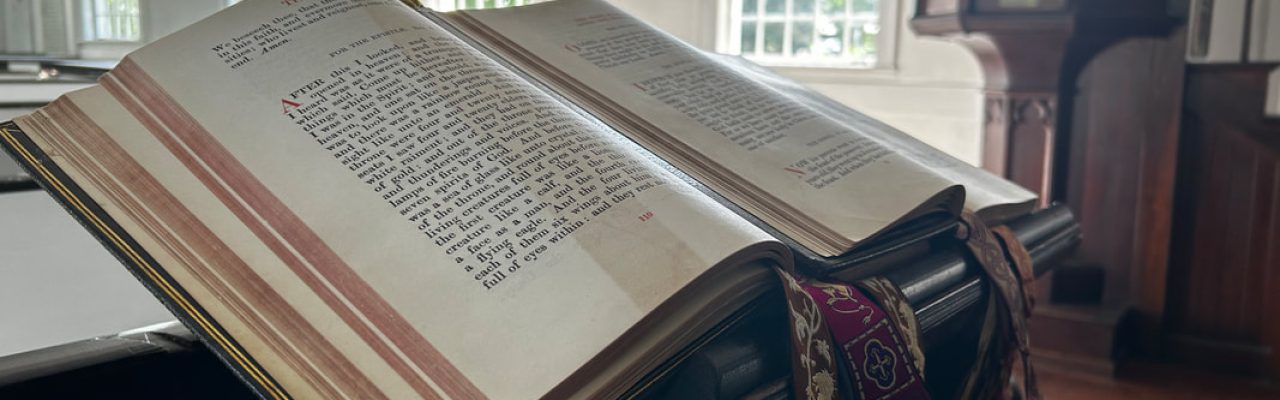
For many centuries the Church in England was an integral part of Western Catholic Christianity.
It developed:
The English Church was therefore not an institution invented by Henry VIII.
It was an ancient Church with centuries of history before the Reformation.
The sixteenth-century Reformation brought profound changes.
Under Henry VIII, the Church in England broke communion with the authority of the Pope.
Under Edward VI, further theological and liturgical reforms followed.
Under Mary I, communion with Rome was restored.
Under Elizabeth I, the religious settlement established the distinctive constitutional and theological form of the Church of England.
The important point is this:
The Reformation changed the Church in England; it did not create Christianity in England.
The Church of England itself describes its Elizabethan settlement as retaining substantial continuity with the Patristic and Medieval Church — including the catholic creeds, its pattern of ministry, its buildings and aspects of its liturgy — while incorporating Protestant theological insights. (Church of England)
This is the foundation of the familiar Anglican description:
Catholic and Reformed.
The Church of England continues to maintain the historic threefold ministry of:
Bishops — Priests — Deacons.
Its bishops are ordained within historic episcopal succession, understood as continuity with the Apostolic Church. The Church of England itself describes this historic succession as an intended continuity from the Apostles. (Church of England)
Its Canon A 1 declares:
“The Church of England … belongs to the true and apostolic
Church of Christ…”
Thus, in its own canonical understanding, the Church of England does not regard itself as a newly invented Christian body.
It understands itself as belonging to the continuing Apostolic Church.
(Church of England)
This is particularly important for understanding the High Church tradition.
High Church Anglicanism does not understand the Church of England as the creation of the Reformation, but as the continuation of the ancient FIRST CENTURY Church in the English tradition, reformed in doctrine and ecclesiastical order while retaining the historic Catholic faith, ministry and sacramental life.
The Reformation, therefore, is understood not as the birth of the Church but as a period of reform within the continuing Church in England.
The Church retained the historic creeds, episcopacy, priesthood, diaconate, sacramental life, liturgical worship and continuity with the ancient Church, while reforming doctrine and ecclesiastical government.
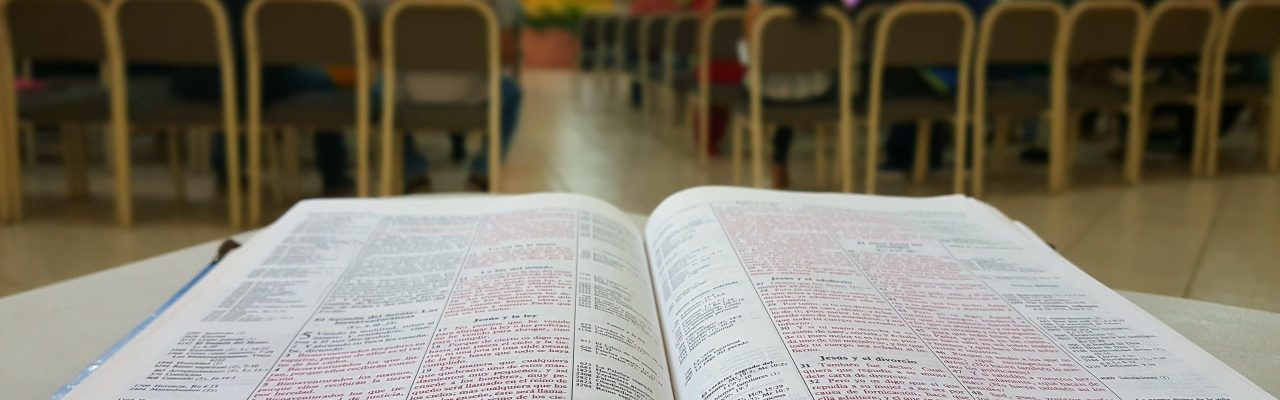
One of the great instruments of the English Reformation was the Book of Common Prayer.
Associated particularly with Thomas Cranmer, it brought the worship of the Church into a common English liturgical form.
Yet the Prayer Book did not discard the whole inheritance of the ancient Church.
It retained:
Thus the Prayer Book became one of the principal instruments through which the reformed English Church continued to express its ancient Christian inheritance.
The seventeenth century witnessed intense conflict within English Christianity.
The Civil War and Commonwealth brought the temporary abolition of the episcopate and suppression of the Book of Common Prayer.
With the Restoration of the monarchy in 1660, episcopacy and the Prayer Book were restored.
The 1662 Book of Common Prayer subsequently became the defining liturgical expression of the Church of England.
The Restoration therefore reinforced the importance of continuity in worship, episcopacy and ecclesiastical order.
The Church of England’s history subsequently became intertwined with the expansion of English influence overseas.
The Society for the Propagation of the Gospel, founded in 1701, became an important instrument of Anglican mission.
But Anglican Christianity had already appeared in India before the SPG.
The foundation stone of St Mary’s Church, Madras, was laid in 1678 and the church was consecrated in 1680.
This makes St Mary’s one of the earliest Anglican churches in India.
The history of Anglican Christianity in India therefore belongs to the larger story of the Church in England carrying its faith, ministry and worship overseas.
The organisation of the Anglican Church in India developed considerably during the nineteenth century.
The Diocese of Calcutta was established in 1814, and Thomas Fanshawe Middleton became its first Bishop in 1815.
Bishop Middleton established Bishop’s College in Calcutta, which became an important centre for the theological education of Anglican clergy in India.
Missionary societies also played a major role.
The Church Missionary Society, founded in 1799, became particularly influential in the spread of Anglican Christianity in India.
Thus the Anglican presence in India developed through both ecclesiastical structures and missionary activity.
In the nineteenth century another major chapter began.
The Oxford Movement, beginning in 1833, sought to recover the Catholic character and ancient inheritance of the Church of England.
Figures such as:
encouraged Anglicans to rediscover the Church’s patristic, sacramental and liturgical inheritance.
The movement profoundly strengthened the Catholic tradition within Anglicanism.
High Church Anglicanism existed before the Oxford Movement.
The Oxford Movement did not invent the Catholic inheritance of Anglicanism.
Rather, it renewed, defended and intensified awareness of that inheritance.
The later Anglo-Catholic movement placed particular emphasis upon:
For this reason, the Anglican Catholic tradition looks beyond the Reformation to the much older history of Christianity.
The Catholic revival within Anglicanism also found expression in India.
The Oxford Mission to Calcutta, founded in 1880, became an important expression of Anglo-Catholic missionary Christianity.
The Cambridge Mission to Delhi similarly demonstrated how Anglican missionary work in India was increasingly shaped by a deeper sacramental and Catholic understanding of Anglican Christianity.
The Church was not merely exporting an institution.
It was attempting to establish Christian communities rooted in Scripture, sacrament, worship, discipline and service.
The history of the Church in England also reminds us that the Church is not merely a building or an organisation.
It is the continuing Body of Christ.
Church buildings, cathedrals, altars, vestments, liturgy and ceremonies exist to serve the worship of God.
The visible Church points beyond itself to the invisible reality of Christ’s Body.
The altar therefore becomes more than furniture.
The Eucharist becomes more than a ceremony.
The sanctuary becomes more than a part of a building.
The liturgy becomes more than ritual.
All are intended to direct the Christian towards God through Jesus Christ.
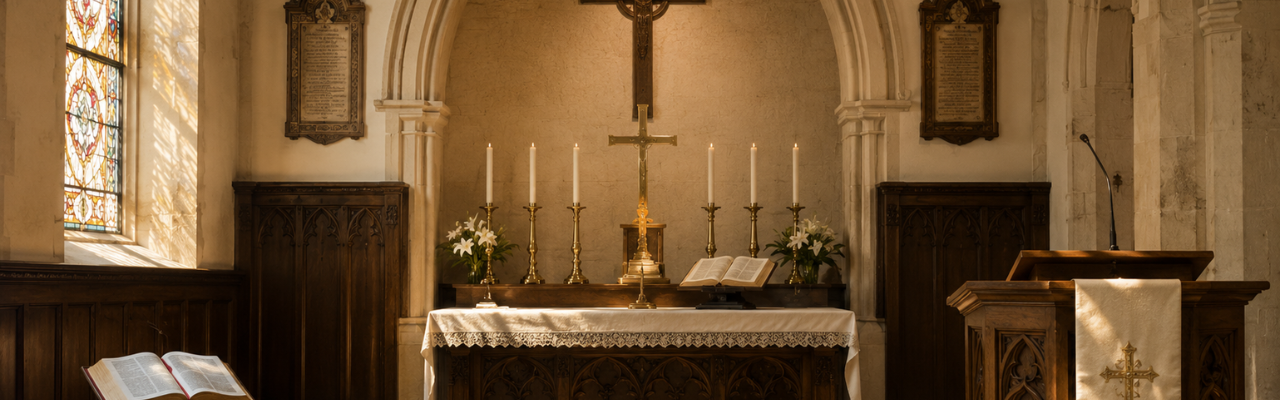
The High Church tradition particularly values continuity in Christian worship.
This continuity is not merely historical nostalgia.
It expresses the conviction that the Church belongs to Christ and therefore must remain faithful to the faith entrusted to it.
The distinctive Anglican position can therefore be understood through two words:
Because the Church of England claims continuity with the ancient and universal Church, retaining:
Because the Church of England was reformed in doctrine, ecclesiastical authority and liturgical expression during the sixteenth century, particularly through the rejection of Papal jurisdiction and the recovery of Scripture as the supreme norm of Christian doctrine.
The two words are therefore not necessarily contradictory.
They describe the distinctive Anglican attempt to maintain Catholic continuity within a reformed Church.
To say that the Church of England began with Henry VIII is historically inadequate.
Henry VIII’s reign was unquestionably decisive.
But Henry did not bring Christianity to England.
He did not establish the first English bishops.
He did not create Canterbury.
He did not establish the Eucharist.
He did not introduce the Christian faith to Britain.
All these belong to a history extending many centuries before him.
The Reformation changed the relationship of the English Church with Rome and substantially reformed its doctrine and worship.
But the Christian inheritance of England is far older than the Tudor period.
The Anglican Church in India inherited this long history.
It inherited:
The Indian Anglican inheritance therefore cannot properly be understood merely by beginning with British colonial history.
Its deeper theological inheritance reaches back through the Church of England to the ancient Church.
This history carries a responsibility.
Christianity cannot be reduced to attending church, listening to sermons or receiving religious comfort.
The Christian is called to know Christ, hear His teaching, obey His commandments and live accordingly.
Jesus said:
“If ye love me, keep my commandments.”
The Church exists to teach the faith and to form disciples.
The Great Commission was not:
“Go and make people feel good.”
It was:
“Go ye therefore, and teach all nations…”
The Christian therefore has a personal responsibility to know what Christ taught.
The pulpit cannot substitute for personal discipleship.
The Church cannot believe on behalf of the individual Christian.
The Christian must hear, examine, understand and obey.
The history of the Church in England is therefore not simply a story of institutions.
It is a story of continuity, reform, faithfulness, failure, renewal and mission.
The story is one of a Christian inheritance carried across generations.
And the central question remains the same:
Has the Church faithfully preserved and taught the faith entrusted to it by Christ and His Apostles?
For the High Church Anglican, the answer begins not in the sixteenth century but with the ancient Church.
The Church of England is understood as a continuing Church in the English tradition — reformed, but not newly created; Catholic in inheritance, Reformed in doctrine, Apostolic in ministry, and ordered to the worship and service of God.
Its history ultimately points beyond England, beyond Anglicanism, and beyond every ecclesiastical institution — to Jesus Christ, the Head of the Church.
“Jesus Christ the same yesterday, and to day, and for ever.”
— Hebrews 13:8, AKJV
This is the historical inheritance that lies behind the Anglican Church today.